

Screen printing on bottles
– Advantages, disadvantages and a comparison to digital printing
Anyone looking to have glass bottles or water bottles printed will, sooner or later, face an important decision: should the design be produced using screen printing or digital printing?
Both methods have their merits and produce high-quality results. Nevertheless, they differ significantly in terms of durability, colour effect, cost-effectiveness and design options.
Printing technology plays a key role, particularly when it comes to reusable bottles. The bottles are used, transported and cleaned on a regular basis. The print must therefore retain its high-quality appearance over time and reliably represent the brand.
In this article, we explain how screen printing works, what the advantages and disadvantages of the process are, and when digital printing might be the better choice.
Both methods have their merits and produce high-quality results. Nevertheless, they differ significantly in terms of durability, colour effect, cost-effectiveness and design options.
Printing technology plays a key role, particularly when it comes to reusable bottles. The bottles are used, transported and cleaned on a regular basis. The print must therefore retain its high-quality appearance over time and reliably represent the brand.
In this article, we explain how screen printing works, what the advantages and disadvantages of the process are, and when digital printing might be the better choice.
Do you have any questions or need advice? We are just a click away!
Our team will assist you with all aspects of printed drinking bottles – from design ideas to ordering.
What is screen printing?
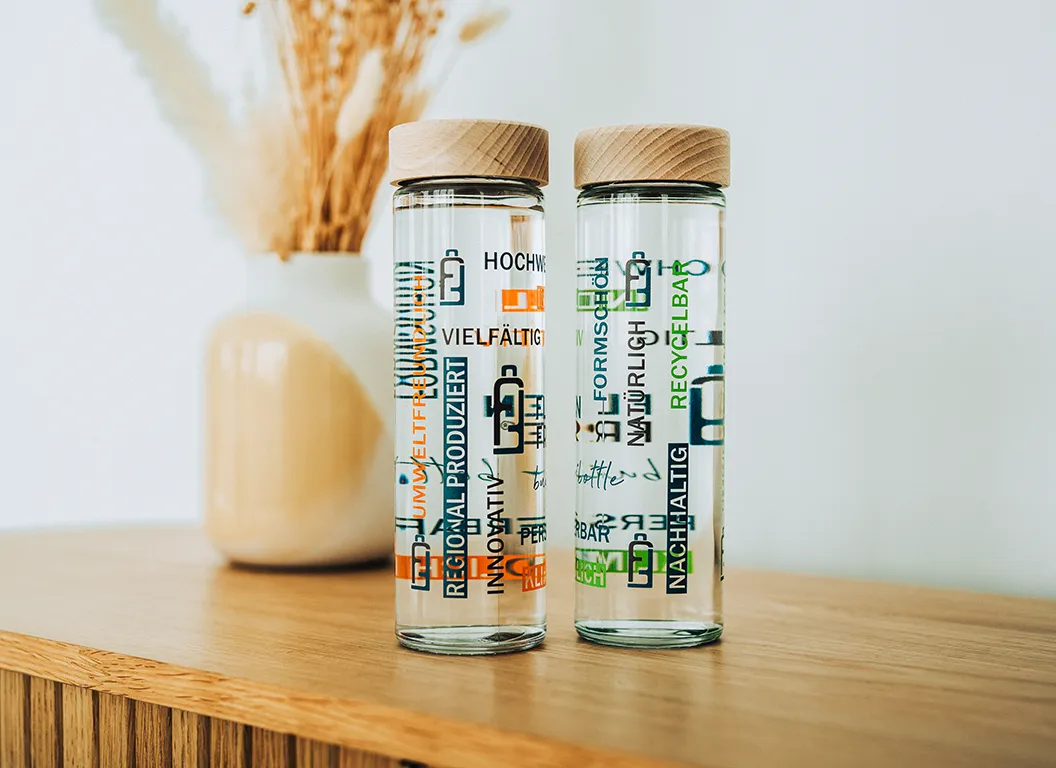
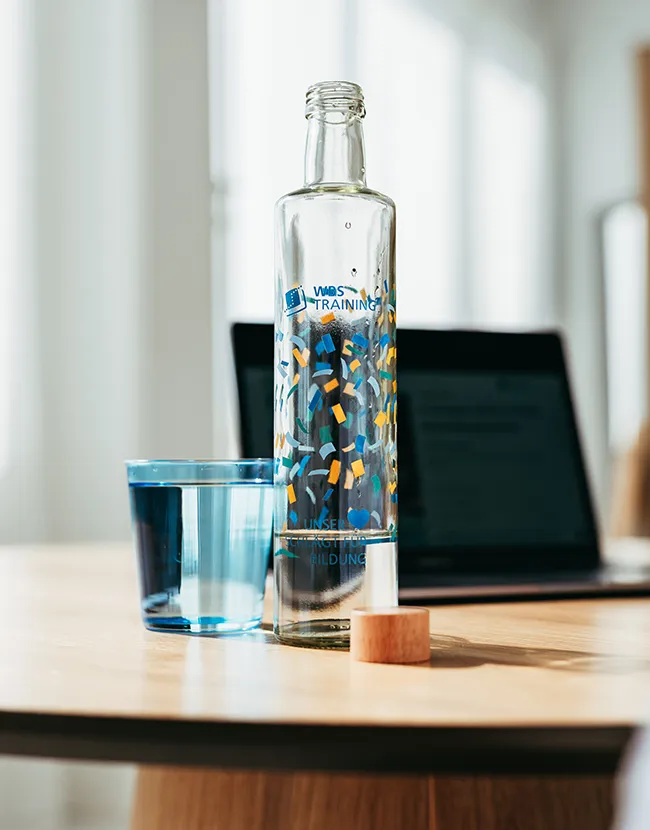
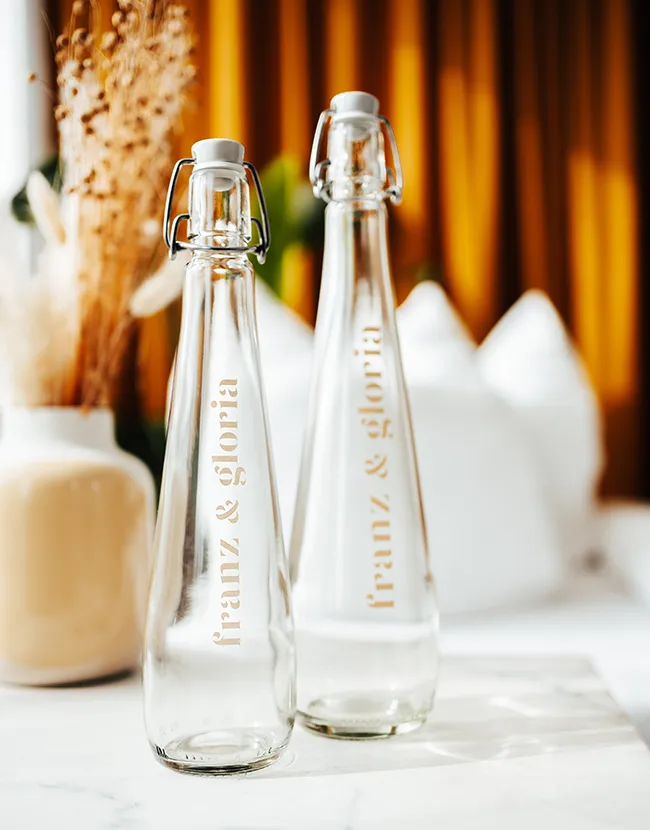
Screen printing is one of the most tried-and-tested printing methods for glass bottles, water bottles and packaging. In this process, the ink is transferred directly onto the surface of the bottle using a fine-mesh fabric – known as a screen.
A separate screen is created for each ink. This allows the inks to be applied with great precision and high opacity.
Screen printing is particularly suitable for:
A separate screen is created for each ink. This allows the inks to be applied with great precision and high opacity.
Screen printing is particularly suitable for:
Company logos
Lettering
Pictograms
QR-Codes
Graphic elements
Solid colour areas
Screen printing has been an established standard for decades, particularly for glass bottles, as the process delivers high colour vibrancy and excellent durability.
Why screen printing is commonly used for bottles
When it comes to printing on bottles, there are usually three key requirements:
High durability
Exact brand colours
Cost-effective production
This is precisely where screen printing really comes into its own. It is one of the most popular finishing techniques, particularly for glass bottles featuring a company logo or catering bottles with permanent branding.
Printing directly onto the surface creates a high-quality finish that looks significantly more durable than adhesive labels.
Printing directly onto the surface creates a high-quality finish that looks significantly more durable than adhesive labels.
Would you like more information on print data?
We have summarised all relevant information for you in a clear and concise manner.
What colours are used in screen printing?
Different colour systems are used depending on the requirements.
Ceramic paints
Ceramic inks are fired onto the glass after printing, forming a permanent bond with the glass surface.
Advantages:
– maximum durability
– excellent dishwasher resistance
– ideal for reusable bottles
– excellent scratch resistance
Typical applications:
– catering
– hospitality
– mineral water bottles
– durable branded bottles
Advantages:
– maximum durability
– excellent dishwasher resistance
– ideal for reusable bottles
– excellent scratch resistance
Typical applications:
– catering
– hospitality
– mineral water bottles
– durable branded bottles
UV inks
UV inks are cured using UV light.
Advantages:
– high flexibility
– fast production
– cost-effective implementation for many applications
Typical applications:
– promotional bottles
– promotional items
– small and medium print runs
Advantages:
– high flexibility
– fast production
– cost-effective implementation for many applications
Typical applications:
– promotional bottles
– promotional items
– small and medium print runs
The benefits of screen printing on bottles
Durability
One of the major advantages of screen printing is its durability.
Printed bottles are regularly washed, transported, handled and reused.
Particularly with fired ceramic inks, the print remains intact even after many wash cycles.
Printed bottles are regularly washed, transported, handled and reused.
Particularly with fired ceramic inks, the print remains intact even after many wash cycles.
Exact Pantone colours
For many companies, maintaining their corporate identity is crucial.
Screen printing allows for the highly precise reproduction of Pantone colours and defined corporate colours.
This ensures that logos and brand colours appear particularly consistent across different batches of bottles.
Screen printing allows for the highly precise reproduction of Pantone colours and defined corporate colours.
This ensures that logos and brand colours appear particularly consistent across different batches of bottles.
High colour brilliance
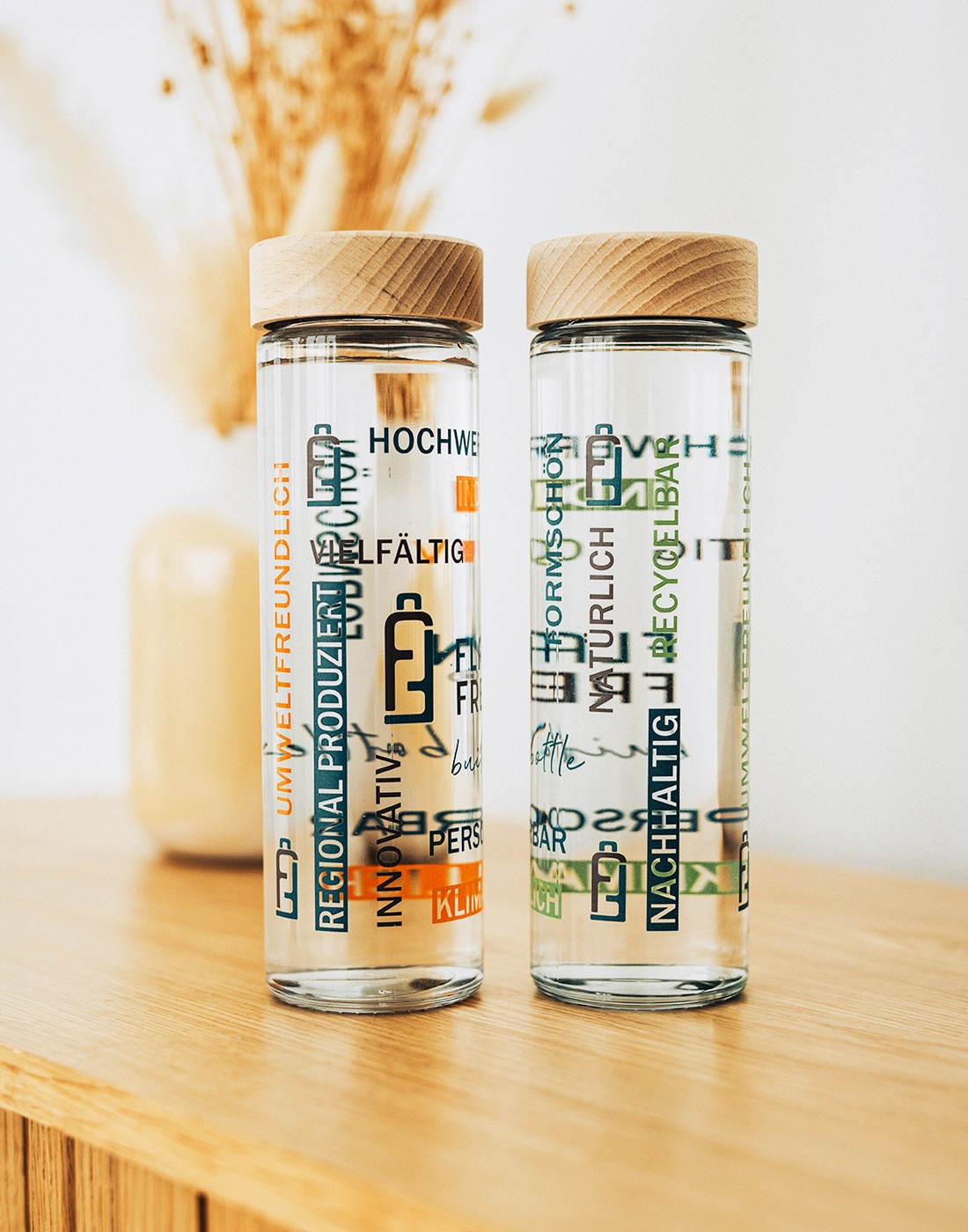
Screen printing produces rich, opaque colours with a high-quality finish.
This produces particularly elegant results on glass surfaces.
Logos appear crisp, high-contrast and professional.
This produces particularly elegant results on glass surfaces.
Logos appear crisp, high-contrast and professional.
Cost-effective for larger print quantities
Setting up the printing process involves some initial effort.
However, as print runs increase, this cost is spread across a large number of products.
As a result, screen printing is often more cost-effective than digital printing, particularly for medium and large print runs.
However, as print runs increase, this cost is spread across a large number of products.
As a result, screen printing is often more cost-effective than digital printing, particularly for medium and large print runs.
Premium feel
Depending on the pressure applied, a slightly textured surface is created.
This added quality is particularly appreciated in high-quality glass bottles.
This added quality is particularly appreciated in high-quality glass bottles.
Wide range of materials
Screen printing is suitable for a wide range of materials and surfaces. In addition to glass bottles, it can also be used to print on drinking bottles made of Tritan, plastic or metal.
This makes it possible to implement consistent designs across different product ranges.
This makes it possible to implement consistent designs across different product ranges.

Are there any disadvantages to screen printing?
Despite its many advantages, screen printing is not the best solution for every project.
Photorealistic images are only possible to a limited extent
Complex images with many subtle shades or soft colour gradients are usually easier to reproduce using digital printing.
Customisation is more labour-intensive
If each bottle is to be given a different name or number, digital printing is usually the more flexible option.
Having lots of colours adds to the workload
As a separate screen is required for each colour, the effort and costs increase as the number of colours rises.
How durable is screen printing on glass bottles?
This is a question we are asked very frequently.
The durability depends on various factors:
– the printing system used
– the bottle material
– frequency of use
– cleaning methods
Ceramic screen printing, in particular, is considered one of the most durable finishing methods for glass bottles.
That is why it has been used for many years on beverage bottles, returnable packaging systems and high-quality branded packaging.
The durability depends on various factors:
– the printing system used
– the bottle material
– frequency of use
– cleaning methods
Ceramic screen printing, in particular, is considered one of the most durable finishing methods for glass bottles.
That is why it has been used for many years on beverage bottles, returnable packaging systems and high-quality branded packaging.
What is digital printing on bottles?
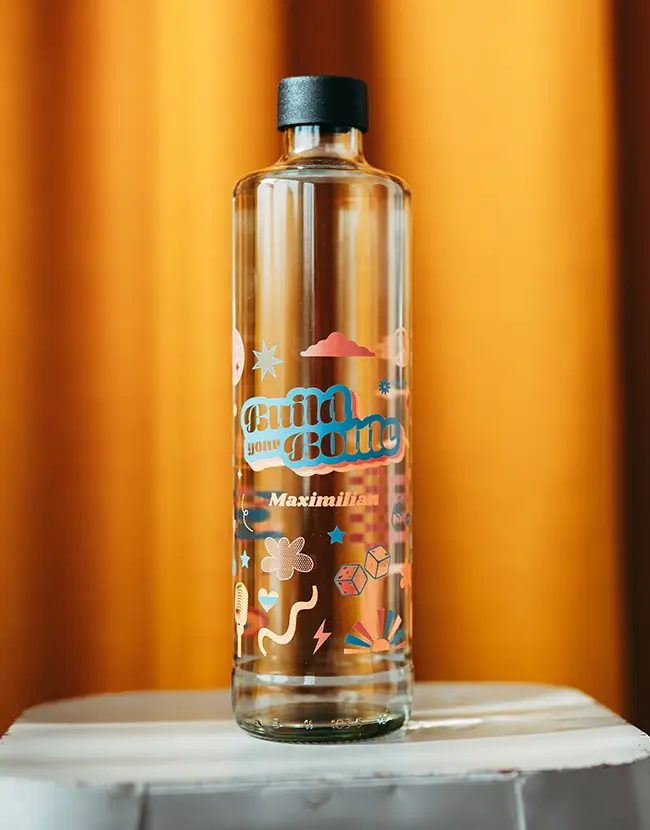
With digital printing, the design is transferred directly onto the bottle from a digital file.
Unlike screen printing, there is no need to create screens.
This makes the process particularly suitable for:
– small print runs
– personalised bottles
– photographic designs
– colour gradients
– illustrations
Unlike screen printing, there is no need to create screens.
This makes the process particularly suitable for:
– small print runs
– personalised bottles
– photographic designs
– colour gradients
– illustrations
Screen printing or digital printing? A direct comparison :
| Criteria | Screen Printing | Digital Printing |
|---|---|---|
| Durability | Very high | High |
| Pantone colours | Very high | Limited |
| Colour brilliance | Very high | High |
| Photo motifs | Limited | Very good |
| Colour gradients | Limited | Very good |
| Personalisation | Limited | Very good |
| Haptics | High-quality | Less noticeable |
When is screen printing the best option?
Screen printing is particularly recommended when:
– a company logo is to be printed
– corporate design colours must be matched exactly
– large quantities are being produced
– a long-lasting finish is required
– the bottles are to be used over the long term
Typical examples:
– Staff bottles
– Conference bottles
– Catering bottles
– Hotel water bottles
– Club bottles
– Promotional items featuring a company logo
– a company logo is to be printed
– corporate design colours must be matched exactly
– large quantities are being produced
– a long-lasting finish is required
– the bottles are to be used over the long term
Typical examples:
– Staff bottles
– Conference bottles
– Catering bottles
– Hotel water bottles
– Club bottles
– Promotional items featuring a company logo
When is digital printing the best option?
Digital printing is particularly suitable when:
– photographic images are used
– colour gradients are required
– small print runs are planned
– each bottle is to be customised
– creative campaign designs are to be produced
Typical examples:
– event bottles
– onboarding gifts
– limited editions
– personalised water bottles
– photographic images are used
– colour gradients are required
– small print runs are planned
– each bottle is to be customised
– creative campaign designs are to be produced
Typical examples:
– event bottles
– onboarding gifts
– limited editions
– personalised water bottles
Our recommendation based on practical experience
As specialists in the finishing of glass and plastic bottles, we handle numerous printing projects across a wide range of industries every year.
In practice, we opt for screen printing for the majority of our standard bottle projects. The reason is simple: hardly any other process combines colour vibrancy, Pantone accuracy, durability and cost-effectiveness so convincingly.
Screen printing is often the most technically sound solution, particularly for glass bottles featuring a company logo, bottles for the catering industry, or returnable bottles in a corporate design.
Digital printing really comes into its own when customisation, small print runs or particularly creative designs are required.
In practice, we opt for screen printing for the majority of our standard bottle projects. The reason is simple: hardly any other process combines colour vibrancy, Pantone accuracy, durability and cost-effectiveness so convincingly.
Screen printing is often the most technically sound solution, particularly for glass bottles featuring a company logo, bottles for the catering industry, or returnable bottles in a corporate design.
Digital printing really comes into its own when customisation, small print runs or particularly creative designs are required.
FAQ on screen printing
Is screen printing dishwasher-safe?
Yes. Ceramic screen printing, in particular, offers excellent resistance to frequent washing.
What colours are available for screen printing?
These include Pantone colours, spot colours and opaque solid colours.
At what minimum order quantity does screen printing become cost-effective?
That depends on the design and the number of colours. For medium and large print runs, screen printing is often particularly cost-effective.
Can QR codes be printed using screen printing?
Yes. The key requirements are sufficient size and contrast.
Is screen printing more sustainable than a label?
As the printing is applied directly to the bottle and no additional label materials are required, screen printing can be a durable and resource-efficient solution for returnable bottles.
Conclusion
Screen printing is one of the most important printing processes for glass and plastic bottles, and with good reason. The process offers impressive durability, precise colour reproduction, a strong brand impact and cost-effectiveness for larger print runs.
Digital printing, on the other hand, offers advantages for small runs, photorealistic designs and personalised designs.
Which technique is the right one ultimately depends on the design, print run, budget and intended use. However, for classic company logos and durable reusable bottles, screen printing is often the first choice.
Digital printing, on the other hand, offers advantages for small runs, photorealistic designs and personalised designs.
Which technique is the right one ultimately depends on the design, print run, budget and intended use. However, for classic company logos and durable reusable bottles, screen printing is often the first choice.