

What is Tritan?
– Characteristics, advantages and disadvantages of BPA-free plastic
Whether for sport, at the office, at school or on the go – reusable water bottles have long been part of everyday life for many people. Alongside traditional glass and stainless steel bottles, Tritan water bottles in particular have become increasingly popular in recent years. They are considered lightweight, robust and transparent, and are often marketed as a BPA-free alternative to conventional plastics.
But what exactly is it? What is the material made of? Is it safe for your health and sustainable? And when is a Tritan water bottle a better choice than one made of glass or stainless steel?
But what exactly is it? What is the material made of? Is it safe for your health and sustainable? And when is a Tritan water bottle a better choice than one made of glass or stainless steel?
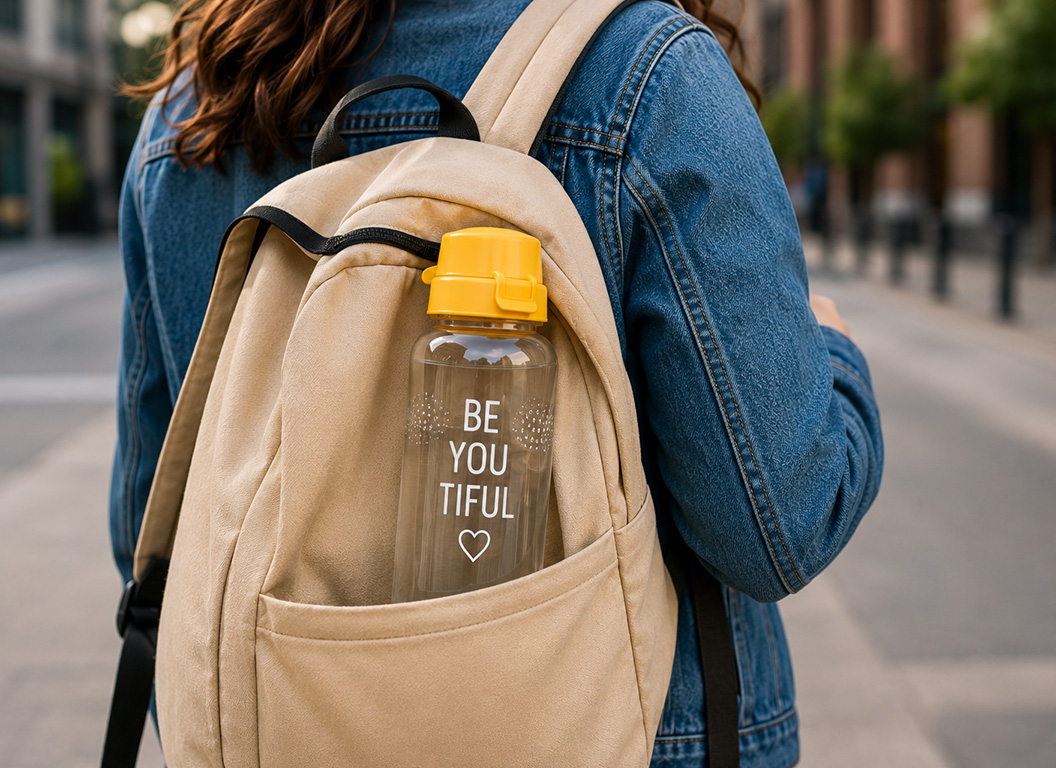
Visual concept implemented with AI support
In a nutshell:
Tritan is a modern copolyester plastic that has been specially developed for durable products intended for contact with food. The material is BPA-free, transparent, tasteless and significantly more shatter-resistant than glass.
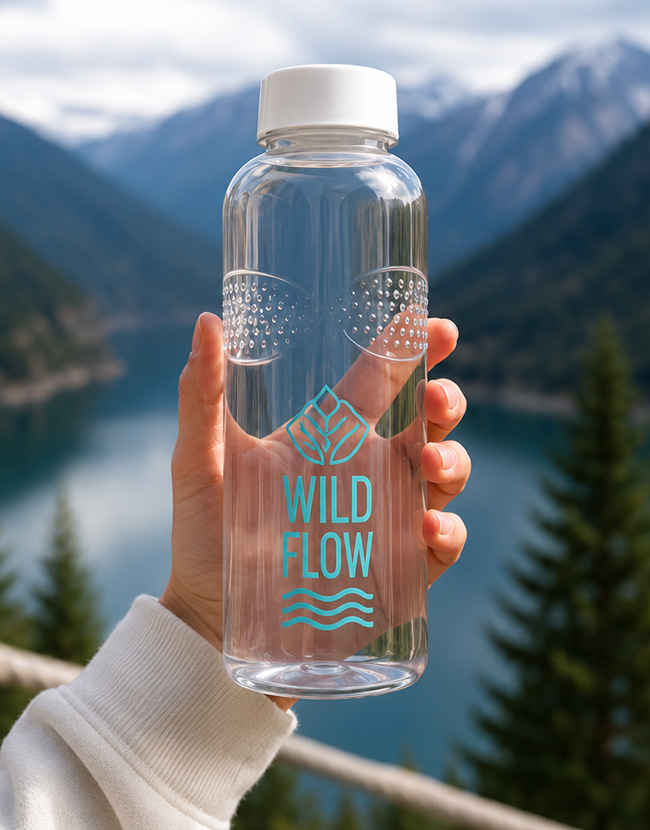
Visual concept implemented with AI support
About the material:
Tritan is a high-quality copolyester plastic developed by the US company Eastman Chemical Company.
The material was specifically designed for applications where transparency, durability and food safety are key considerations. Today, Tritan is used worldwide in a range of products, including water bottles, food containers, kitchenware, and medical and technical products.
Unlike many older plastics, it does not contain bisphenol A (BPA) and is therefore frequently used in products that come into regular contact with food or drink.
Another advantage is that Tritan combines properties that were previously often found only separately. The material is almost as transparent as glass, yet significantly lighter and considerably more shatter-resistant. This makes it particularly suitable for use on the move – for example, during sport, when travelling or in everyday working life.
Incidentally, the term ‘Tritan’ is not a general term for a material, but a registered trademark of Eastman. Chemically speaking, it is a special copolyester, the exact composition of which is protected by the manufacturer.
The material was specifically designed for applications where transparency, durability and food safety are key considerations. Today, Tritan is used worldwide in a range of products, including water bottles, food containers, kitchenware, and medical and technical products.
Unlike many older plastics, it does not contain bisphenol A (BPA) and is therefore frequently used in products that come into regular contact with food or drink.
Another advantage is that Tritan combines properties that were previously often found only separately. The material is almost as transparent as glass, yet significantly lighter and considerably more shatter-resistant. This makes it particularly suitable for use on the move – for example, during sport, when travelling or in everyday working life.
Incidentally, the term ‘Tritan’ is not a general term for a material, but a registered trademark of Eastman. Chemically speaking, it is a special copolyester, the exact composition of which is protected by the manufacturer.
Good to know:
Not every BPA-free plastic bottle is automatically made of Tritan. Other plastics can also be BPA-free. Conversely, ‘Tritan’ always refers to a specially developed copolyester produced by Eastman.
What is Tritan made of?
Tritan belongs to the group of copolyesters. These are plastics whose properties are specifically influenced by the combination of different monomers.
Compared with conventional polycarbonates, it is characterised in particular by its high impact strength, transparency and chemical resistance.
As Tritan is BPA-free, the material can be manufactured without the bisphenol A components typically found in polycarbonates. At the same time, it meets the requirements for numerous food-contact applications and is used, amongst other things, for water bottles, baby products, kitchenware and food containers.
Compared with conventional polycarbonates, it is characterised in particular by its high impact strength, transparency and chemical resistance.
As Tritan is BPA-free, the material can be manufactured without the bisphenol A components typically found in polycarbonates. At the same time, it meets the requirements for numerous food-contact applications and is used, amongst other things, for water bottles, baby products, kitchenware and food containers.
This means, especially for consumers:
– high stability
– low weight
– clear appearance
– tasteless and odourless
– good resistance to many cleaning products
– low weight
– clear appearance
– tasteless and odourless
– good resistance to many cleaning products
This combination makes the material particularly suitable for products that are used every day and cleaned regularly.
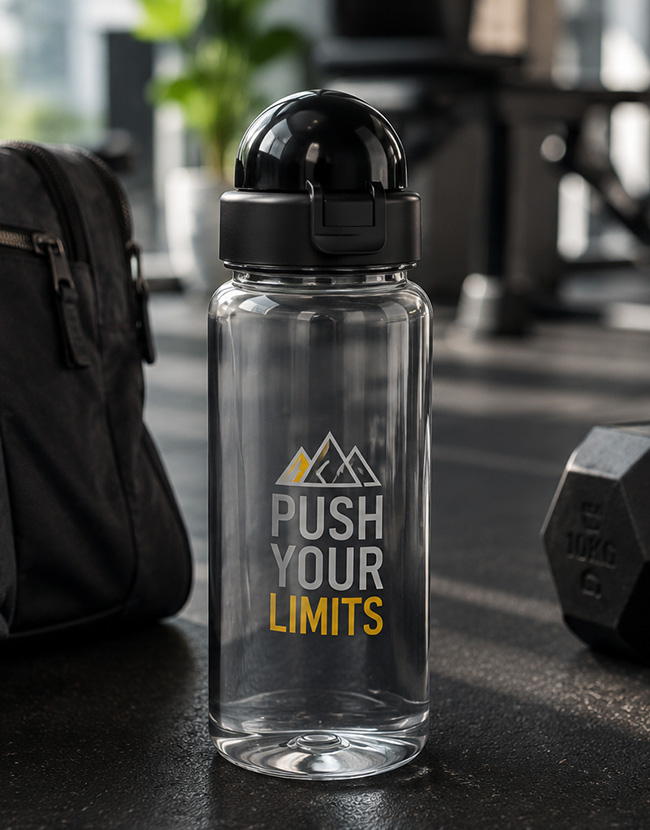
Visual concept implemented with AI support
What are the characteristics of Tritan?
The combination of low weight, high strength and a transparent appearance makes it one of the most commonly used plastics for high-quality drinking bottles.
| Feature | Tritan |
|---|---|
| BPA-free | Yes |
| Tasteless | Yes |
| Odourless | Yes |
| Transparent | Yes |
| Shatterproof | Very high |
| Dishwasher-safe | Generally speaking, yes* |
| Food-safe | Yes |
High break resistance
It has significantly higher impact resistance than glass and does not shatter if dropped. This makes the material particularly suitable for situations where durability is required.
Lightweight
Compared to glass, Tritan bottles weigh significantly less. This is particularly noticeable on longer outings or in everyday working life, when the bottle is carried around frequently.
Taste and odourless
A high-quality drinking vessel should, as far as possible, not affect the taste of the drink. It does not readily absorb odours or flavours and is therefore suitable for water as well as fruit spritzers or cold teas.
Interested?
Are you already interested in a durable Tritan water bottle? In our range, you’ll find high-quality water bottles that can be custom-printed or used as promotional gifts.
Buy Tritan water bottles
Buy Tritan water bottles